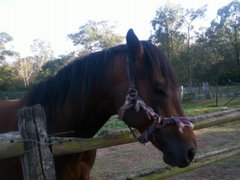
To me the most beautiful animal baby is a new born foal. They just seem so beautiful and embody all the things we love to see in horses, the long legs, the fluffy ears, the upright tail as they trot around with Mum, just cannot find anything to beat them in my opinion. I am not biased.
I like to think of a foal as the potential of all the good things in horses. They are at a good size and age to start training. While they are small they are still very impressionable.
When I read about foals, and talk to others about them, people often mention the idea of foal imprinting. I have the book by D Miller who is a vet and advocates getting the foal the minute it is born and touching it all over and then letting it get up to bond with its mother.
I think that as a system it would be okay if most people could train in it before they actually have a foal. I have heard plenty of stories of mares rejecting their foals because of the time the people took to do the "imprinting". Nature has a way with animals whereby the mother can quickly "forget" her foal if it has been taken by a predator, and the foal goes limp and soporific when taken by a predator. It is theorised that this helps lessen the shock for the baby. At that time of neo-natal delivery, nature does not discriminate within the systems of the animals that it is just a little human interference and not a predator taking the foal.
My preference is to let the mare and foal bond, and get to know each other for a few hours. In a small space. The mare wont be too interested in grazing much on the first couple of days anyhow. She should have an ample supply of water however, because she will be making quite a bit of milk for the foal. That isn't to say, either, that you shouldn't offer her any regular feeds you normally offer her. Nothing stands in the way of my mare and her dinner/breakfast.
It is a good time to catch the foal when it is about 12 hours old. Mum and bub have got a little used to each other, it is fairly steady on its legs and has had a little sleep. (If any one of these is missing or none of these things are present in your foal, please call your vet.) Get the foal's attention by going into the middle of the yard and squatting down. A curious foal will come to inspect. A protective mother may be a bit of a problem, but if you have worked with her a fair bit prior to the birth, and she trusts you, just put a lead on her, get the foal's attention.
When it comes up to you, allow it to smell you and investigate. Softly deter any nibbling that occurs, just softly push the little muzzle away with your fingers. Do everything softly and slowly. Once it is happy with you, stand slowly so as not to spook it. Take it around its chest and rump. Only for a moment. Make reassuring noises and only hold it for a moment. I would do this three or four times over a 24 hour period, till you can hold it up to a minute or two. Then as you hold it, pat it all over its body. In the next lesson, lift its feet up, one by one. Next you can put your finger gently into its mouth. Work gently and softly. If you give the foal a name, call the name as well.
But - make sure you also reward the mother with a reassuring pat telling her what a good girl she is etc. Then leave the foal untouched for about two or three days and then do it all over again. Restraining, patting, lifting up the feet. Then slip a halter on and off. Scratching helps too, especially around the tail area.
At about a week to ten days, the foal should be happy enough that you are not a predator and the mother reassured enough that you are not going to steal her baby. Add a lead to the foal halter and let it get used to it. Pull slightly, once it is used to it, to get it to step forward. Don't put any pressure on the foal to do this. No jerking whatever you do. The tiny poll isn't ready to have hard pressure applied. But the pressure on the poll is fundamental to all that the foal will do during its life with people, and the younger it learns to obey it, the better.
After two more days or about two weeks after birth, you will be ready to teach tying up.
My reasons for teaching such a young foal to tie up are that this too is the most fundamental thing a horse needs to learn to do. Tie up and stand still, for the vet, for the farrier for the dentist, for the trailer.
You will need a bicycle inner tube, an old one, tied to a sturdy post, and the lead. Put the halter on the foal as normal, and if you can, lead it to the post. Tie the lead to the inner tube and let go. The foal may pull a bit, but the inner tube is flexible enough to withstand being pulled. If the foal begins to really fight the lead, step in and hold the foal, speak reassuringly to it, and move it in your arms closer to the post. This is really important. You never want the foal to be afraid of being tied up but if you suddenly untie it because of panic, it has learnt that panic type behaviour will get it out of that situation. Being so small your natural reaction to its panic will be to free it. But the holding it and moving it forward so that it is not pulling against the post is better. Once it calms down, then untie it. Then fuss over it.
More than likely if the foal panics the mare will panic as well. Pat her and reassure her. The foal will more than likely run to mum for a nurse. She will smell it and calm down more. Leave off tying the foal now for a day or two, but make sure you don't leave it any longer. Once the foal stands quietly while tied, you don't need to revise this again till it is a weanling.
Although once my foals are eating food for themselves around 6-7 weeks, I give them their own food, because my mare is a stealer. A haynet and all as they grow. But at mealtime, when they are eating, part of the condition they get to eat is they are lead to their food and tied up for part of the time they are eating.
I "wean" about four months old. By this, I mean that I put the foal into the next stable and yard area to the mare, just make it so the foal can't nurse. However, prior to that, I will begin feeding the foal for a few meals in that area away from Mum, and build up to leaving it there for an hour or so after the feed. By this age, my mare isn't too worried as long as she can see her bub. The foals have been so curious about everything, they wander in and out of the stable, smell around the yard. I will put some toys in with them, a large ball, some brightly coloured traffic cones. This yard becomes their home from now on. After a month, the mare has dried up, and they can be let out together. During the month, the mare has two or three hours in her yard and the foal can get out and get grazing. As I said, as long as they can see each other, it isn't a big fuss.
Immediate separation of mare and foal which some people do, so they never see each other ever again, to my way of thinking is just downright mean. You don't need a foal out of your mare every year no matter how valuable you might think she is. It affects them mentally and it can lower the immune system in the weanling to the point it can die of catching something it would not even have if the immune system was not depressed. The life of a foal is not worth it either.
Returning them after a month, the foal may try to nurse. There is nothing there, it is just a comfort thing. Even if the mare cocks her leg to allow it to "nurse". My colt was still doing this as a three year old. It is rather like giving a full contented baby a dummy (pacifier). It is no big deal and don't make it one.
Now you have a happy weanling. It knows how to be tied up and stand still. It knows to lift its legs, how to lead and behave like a well mannered horse. Most weanlings are ready to strut their stuff to the world and are happy to be lead around. Now is a good time to start those other things with the bags and stuff. Now is a good time to teach it to come to its name.
Happy foaling.
Showing posts with label Bombproofing/desensiting. Show all posts
Showing posts with label Bombproofing/desensiting. Show all posts
Sunday, October 7, 2007

Wednesday, June 20, 2007
Bombproofing/desensitising your Horse
Bombproofing/desensitising your horse is a safety issue. You don't want to be riding along and suddenly it jumps from under you and you break a bone in the fall. And it gallops off and takes a month to find. You don't want your horse rearing suddenly and whacking you in the forehead with a hoof leaving a lump the size of a duckegg. You don't want spooky horses period.
The best time to bombproof a horse is as a foal, but if you get a new horse that has been bred and owned by other people, it is still possible to bombproof it. It takes a little time and effort, but believe me, it is worth it.
The first thing to do is find something moderately scarey, like a small paper bag. Rub it in your hands so that it makes noise to get your horse's attention. Hold it out to him so that he can see clearly what it is and let him smell it. Once he realises by sight and smell that it isn't harm full, you can place it on his shoulder and see what happens. He will probably watch what you are doing. Rub it around the shoulder for a bit so that he gets the feel of it. Then rub his belly with it and then the neck working towards the head. Then do the flank and rump. If he moves away, stop for a moment and start at a place where he didn't move. Work you way up or down, till he stands quietly for the movement. Then rub under the belly and touch the udder or gentials of a male horse with it.
I am not being "rude" here. Part of the trust you build with your horse depends on these areas being touched. It is trusting you not to hurt it.
Then rub the tail area. Then work back towards the head again and over the nose and eyes, and up to the ears. This will be trickier than anywhere else on the body, but going back and then forward till he totally accepts it is easiest for the horse and for you.
Now go onto the other side and do it all again.
Don't ask me why, but horses are two sided creatures, and just because they are calm on one side they will be spooky on the other unless you go over it again. I have seen this so many times on all horses.
Once it is okay with the bag, do it again the next day and the next till it is actually bored with you doing it.
Once your horse is happy with the little paper bag, get something a bit bigger and a bit noisier, like a supermarket plastic bag. Do the exact same thing. Make sure it makes lots of noise while you do this.
Then a large plastic feed bag, preferably a coloured one. This will be fun, because it will smell of food and be quite tantalising, but maybe harder to get up to the eyes and ears. Persevere.
Doing it until the horse is bored means that it will ignore this from now on, and bags will not be an issue with it. I also like to leave a few tied to the fences, because then they see them flapping in the breeze, lying around and learn to ignore stuff that is unusual. This also helps with shying when mounted. Flappy stuff is just not an issue.
Next you need a tarpaulin. Spread it out and place it on the ground. Lead your horse to it. Let him look at it and if necessary smell it. Sight and smell are so important to horses. Next you are going to stand on it and give a little tug on the lead. It might take a bit, but sooner or later he will put a hoof on it. Make a big fuss of this, what a good horse etc. My horses have always responded positively to verbal encouragement, so I hope yours do too. If he puts and foot on it, then backs off, try again slowly. Keep urging him on till he will put two fee, and then four feet onto it.
The main reason they are not sure about it is because it is different footing to what they are used to. You can use the same method for teaching them to walk over anything, including gravel. But remember, gravel is pointy and sharp and hurts if on it for too long.
Next, get some family members to blow up some balloons. Get a pin or a needle and go near your horse, and pop a couple. He will probably spook and run around excited. Pop a few more, and then go closer to him. Again, let him see and smell them. Pop them away from his face. but keep popping them. Keep it up till he ignores it. Then pop a few more for good measure. You might need several bags of balloons.
Now for the umbrella. A rainy day is good for this. Go out to where your horse is with the umbrella. It will make him focus right away. Talk to him, so that he knows it is you there. As you get closer and he sees it is you, he should come closer if he normally does.
Close the umbrella and do with it what you did with the paper bag. Then when he is okay with it, put it up slowly. Make sure he can see what you are doing. Hold the umbrella up and let him see and smell it. My boy took to mouthing the edge of it, so if he does this, you are getting there.
Now put it over his head. Hopefully he will put his nose up under it to smell underneath. Put it over his ears. When he realises he isn't getting wet, that is when you have him. I don't know why, but horses like to have their heads out of the rain. The umbrella will be something welcomed around your horse. Be slow and be patient.
And there you have it. Find all sorts of different things and use these methods for them. Eventually he will get so bored with your new things he will just stand there as if to say, "Now what? Is it dinner time yet?"
Lead him various places as well so that he gets used to the neighbourhood. Let the neighbourhood kids come and pat him and get him and them used to each other. If there are horse crazy kids around, encourage them to be friends with your horses. Kids seem to be fascinating for horses. They can be very calming for your mares as well.
Everything you do, do it till your horse is bored with it. But not sour. Then less things are likely to upset him, and it forms the basis for other scarey things, like trailers, vets and dogs.
Have fun with your horse but let him think he is the one having the most fun.
The best time to bombproof a horse is as a foal, but if you get a new horse that has been bred and owned by other people, it is still possible to bombproof it. It takes a little time and effort, but believe me, it is worth it.
The first thing to do is find something moderately scarey, like a small paper bag. Rub it in your hands so that it makes noise to get your horse's attention. Hold it out to him so that he can see clearly what it is and let him smell it. Once he realises by sight and smell that it isn't harm full, you can place it on his shoulder and see what happens. He will probably watch what you are doing. Rub it around the shoulder for a bit so that he gets the feel of it. Then rub his belly with it and then the neck working towards the head. Then do the flank and rump. If he moves away, stop for a moment and start at a place where he didn't move. Work you way up or down, till he stands quietly for the movement. Then rub under the belly and touch the udder or gentials of a male horse with it.
I am not being "rude" here. Part of the trust you build with your horse depends on these areas being touched. It is trusting you not to hurt it.
Then rub the tail area. Then work back towards the head again and over the nose and eyes, and up to the ears. This will be trickier than anywhere else on the body, but going back and then forward till he totally accepts it is easiest for the horse and for you.
Now go onto the other side and do it all again.
Don't ask me why, but horses are two sided creatures, and just because they are calm on one side they will be spooky on the other unless you go over it again. I have seen this so many times on all horses.
Once it is okay with the bag, do it again the next day and the next till it is actually bored with you doing it.
Once your horse is happy with the little paper bag, get something a bit bigger and a bit noisier, like a supermarket plastic bag. Do the exact same thing. Make sure it makes lots of noise while you do this.
Then a large plastic feed bag, preferably a coloured one. This will be fun, because it will smell of food and be quite tantalising, but maybe harder to get up to the eyes and ears. Persevere.
Doing it until the horse is bored means that it will ignore this from now on, and bags will not be an issue with it. I also like to leave a few tied to the fences, because then they see them flapping in the breeze, lying around and learn to ignore stuff that is unusual. This also helps with shying when mounted. Flappy stuff is just not an issue.
Next you need a tarpaulin. Spread it out and place it on the ground. Lead your horse to it. Let him look at it and if necessary smell it. Sight and smell are so important to horses. Next you are going to stand on it and give a little tug on the lead. It might take a bit, but sooner or later he will put a hoof on it. Make a big fuss of this, what a good horse etc. My horses have always responded positively to verbal encouragement, so I hope yours do too. If he puts and foot on it, then backs off, try again slowly. Keep urging him on till he will put two fee, and then four feet onto it.
The main reason they are not sure about it is because it is different footing to what they are used to. You can use the same method for teaching them to walk over anything, including gravel. But remember, gravel is pointy and sharp and hurts if on it for too long.
Next, get some family members to blow up some balloons. Get a pin or a needle and go near your horse, and pop a couple. He will probably spook and run around excited. Pop a few more, and then go closer to him. Again, let him see and smell them. Pop them away from his face. but keep popping them. Keep it up till he ignores it. Then pop a few more for good measure. You might need several bags of balloons.
Now for the umbrella. A rainy day is good for this. Go out to where your horse is with the umbrella. It will make him focus right away. Talk to him, so that he knows it is you there. As you get closer and he sees it is you, he should come closer if he normally does.
Close the umbrella and do with it what you did with the paper bag. Then when he is okay with it, put it up slowly. Make sure he can see what you are doing. Hold the umbrella up and let him see and smell it. My boy took to mouthing the edge of it, so if he does this, you are getting there.
Now put it over his head. Hopefully he will put his nose up under it to smell underneath. Put it over his ears. When he realises he isn't getting wet, that is when you have him. I don't know why, but horses like to have their heads out of the rain. The umbrella will be something welcomed around your horse. Be slow and be patient.
And there you have it. Find all sorts of different things and use these methods for them. Eventually he will get so bored with your new things he will just stand there as if to say, "Now what? Is it dinner time yet?"
Lead him various places as well so that he gets used to the neighbourhood. Let the neighbourhood kids come and pat him and get him and them used to each other. If there are horse crazy kids around, encourage them to be friends with your horses. Kids seem to be fascinating for horses. They can be very calming for your mares as well.
Everything you do, do it till your horse is bored with it. But not sour. Then less things are likely to upset him, and it forms the basis for other scarey things, like trailers, vets and dogs.
Have fun with your horse but let him think he is the one having the most fun.
Subscribe to:
Posts (Atom)